Updated November 2026 · 8 min read
On this page
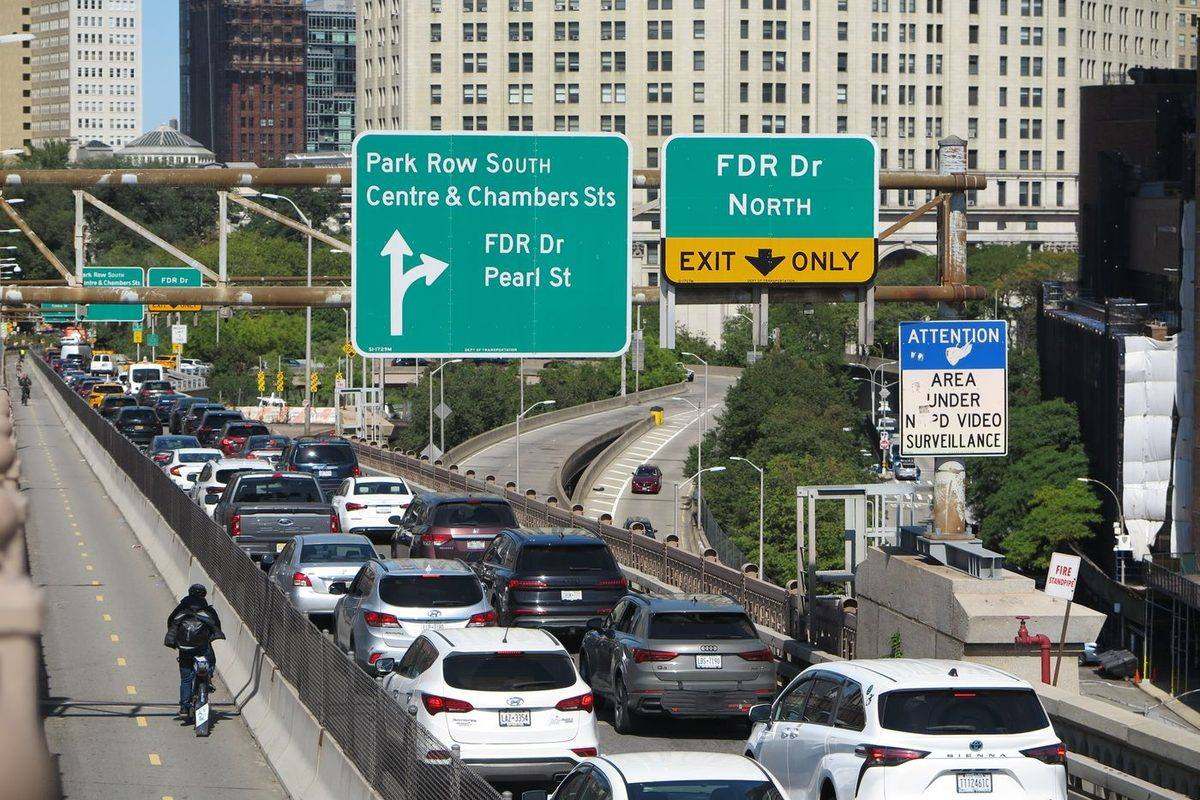
1. What the congestion zone covers
The Congestion Relief Zone is Manhattan at or below 60th Street. A vehicle that enters, exits, or moves within that area is charged once per day, not once per block. The charge is added on top of any bridge or tunnel toll you paid to get there.
As of 2026, a passenger car pays $9 during the day and $2.25 overnight. Trucks, buses, and motorcycles pay different rates, and there is a discount for low-income drivers who register. The MTA publishes the current schedule; treat any number here as a starting point, not a quote.
The FDR Drive and West Side Highway are not charged if you stay on them and do not exit into local streets. A driver crossing town on the FDR from the Brooklyn Bridge to the George Washington Bridge never enters the zone.
2. E-ZPass vs Tolls by Mail
Every toll crossing in New York is cashless. If you have an E-ZPass transponder, the gantry reads it and the toll is deducted from your account. If you do not, a camera photographs the plate and the registered owner receives a bill in the mail.
| Method | Rate | What to know |
|---|---|---|
| NY E-ZPass | Lowest | Account and transponder; works on MTA, Port Authority, and most upstate bridges. |
| Out-of-state E-ZPass | Usually accepted | Most compatible transponders work; a few discount plans do not transfer. |
| Tolls by Mail | Higher | Plate bill sent to the registered owner, often with a per-crossing admin charge. |
A New York E-ZPass account is free to open but requires a small prepaid balance. If you drive in the region more than a few times a year, it pays for itself; for a single weekend, Tolls by Mail is simpler but costs more per crossing.
3. Bridges and tunnels
The MTA operates the Brooklyn-Battery, Queens-Midtown, Queensboro, Williamsburg, Manhattan, and Bronx-Whitestone crossings, among others. The Port Authority runs the George Washington Bridge, Lincoln Tunnel, Holland Tunnel, Goethals, Bayonne, and Outerbridge. All are cashless and all charge by axle height and vehicle class.
A common surprise is that the George Washington Bridge is not part of the congestion zone, but the Lincoln and Holland tunnels empty directly into it. If your hotel is in midtown, the tunnel toll and the congestion charge are two separate line items.
4. Rental cars and admin fees
Rental companies usually offer a toll package: a flat daily fee that covers tolls and their administration. It can be convenient, but it often costs more than the tolls themselves, especially if you drive only one or two crossings.
If you have your own E-ZPass, bring it and use it. Tell the rental company at the counter, keep the transponder in the windshield, and check the final bill for duplicate toll charges. If you use Tolls by Mail, the bill goes to the rental company first, which then charges your card plus an admin fee.
Before you leave the lot: photograph the plate, ask whether the car has a transponder, confirm the daily toll-package price in writing, and note the return time. Toll disputes are much easier with a photo and a signed agreement.
5. Unpaid tolls and penalties
A missed toll is not free. The registered owner receives a violation notice with a penalty that starts around $50 per violation, plus the unpaid toll. Repeat violations can lead to registration suspension or a boot, and a rental company will pass the charge and its admin fee to your card.
If you receive a notice and believe it is wrong, dispute it through the issuing agency within the stated window. Save the rental agreement, the plate photo, and any E-ZPass statement; those three documents resolve most mismatched-plate cases.
6. Common questions
Do I pay the congestion charge if I only drive through on the FDR?+
No, provided you stay on the FDR Drive or West Side Highway and do not exit into the zone. Cameras are placed at entrances and exits, not along the highway itself.
Is my out-of-state E-ZPass accepted in New York?+
In most cases yes. The transponder is read at the gantry and the toll is charged to your home account. Discount plans tied to a specific state may not apply.
Can I avoid tolls entirely driving into Manhattan?+
Not realistically by car. Every crossing from New Jersey, Brooklyn, Queens, or the Bronx is tolled or leads into the congestion zone. The practical alternatives are transit, a park-and-ride, or staying outside the zone.
Does the congestion charge apply on weekends?+
Yes. The charge applies every day, with a lower overnight rate. There is no weekend exemption for passenger cars.
The short version: assume every crossing is cashless, budget the congestion charge as a separate line item, and decide about the rental toll package before you drive, not at the return counter.
Tolls and charges change. Confirm current rates with the MTA, the Port Authority, or the rental agreement in front of you; this page is a planning aid, not a bill.